Plan the scope
Composite describes a range of products, not one interchangeable material. Wisconsin’s deck appendix requires wood-plastic composites to carry performance and ASTM D7032 compliance labeling, and warns that equivalent wood and composite sizes may not have the same capabilities. For seasonal temperature changes, ask the installer to follow the selected product’s spacing instructions; composite boards do not eliminate the need for sound framing and frost-protected support.
- Board samples viewed outdoors
- Manufacturer-specific joist spacing
- End gaps, ventilation and approved fasteners
Sources: Wisconsin Uniform Dwelling Code — SPS 325 Appendix B. Checked November 8, 2026. Confirm current requirements with your building inspector.
Permits and the property
For a project described as being in Neenah, confirm the parcel’s actual municipality before applying. Mailing addresses and zoning jurisdictions are not always interchangeable. Ask that authority about setbacks, easements, deck plans and inspection stages. The statewide deck appendix is a starting point, not parcel-specific approval.
Sources: Wisconsin Uniform Dwelling Code — SPS 325 Appendix B. Checked November 8, 2026. Confirm current requirements with your building inspector.
What to include for this property
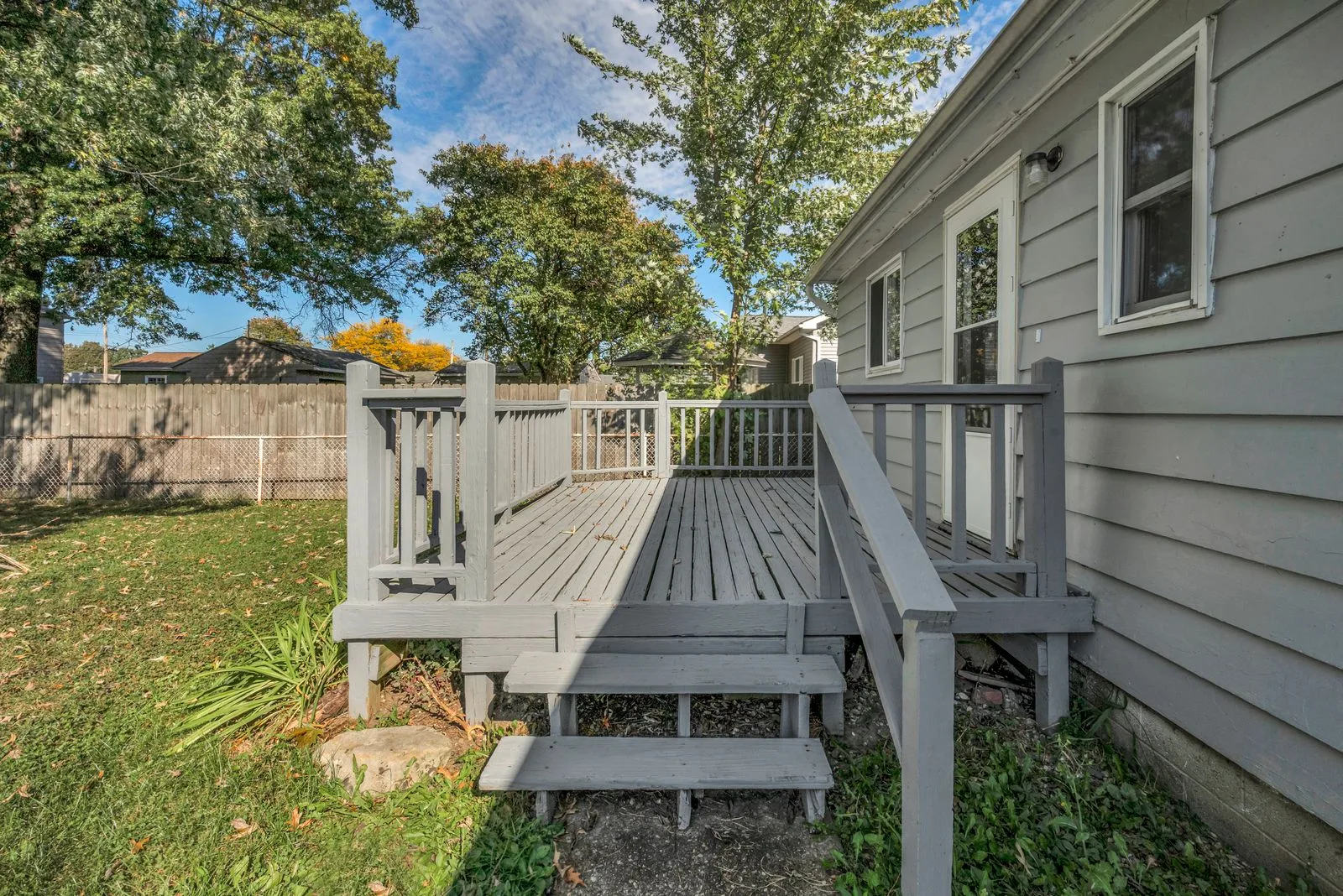
For your Neenah inquiry, describe access to the backyard and the distance from the house door to the ground. List the preferred board product and ask which frame spacing it needs.
Built around Wisconsin conditions
Under Wisconsin’s prescriptive deck appendix, footings must bear on solid ground below frost penetration or at least 48 inches below finished grade, whichever is deeper. This is not a claim that every site has exactly 48 inches of frost. Soil, the house foundation and the proposed loads can require additional design.
Snow drift and sliding snow are explicitly identified as potential concentrated loads. Ask your contractor or designer to check the actual layout rather than treating a basic deck table as approval for a roof, hot tub or heavy planter.
Sources: Wisconsin Uniform Dwelling Code — SPS 325 Appendix B. Checked November 8, 2026. Confirm current requirements with your building inspector.